
Teachers shouldn’t have to build everything from scratch. This is what I’m trying to do about it.
This started with one teacher
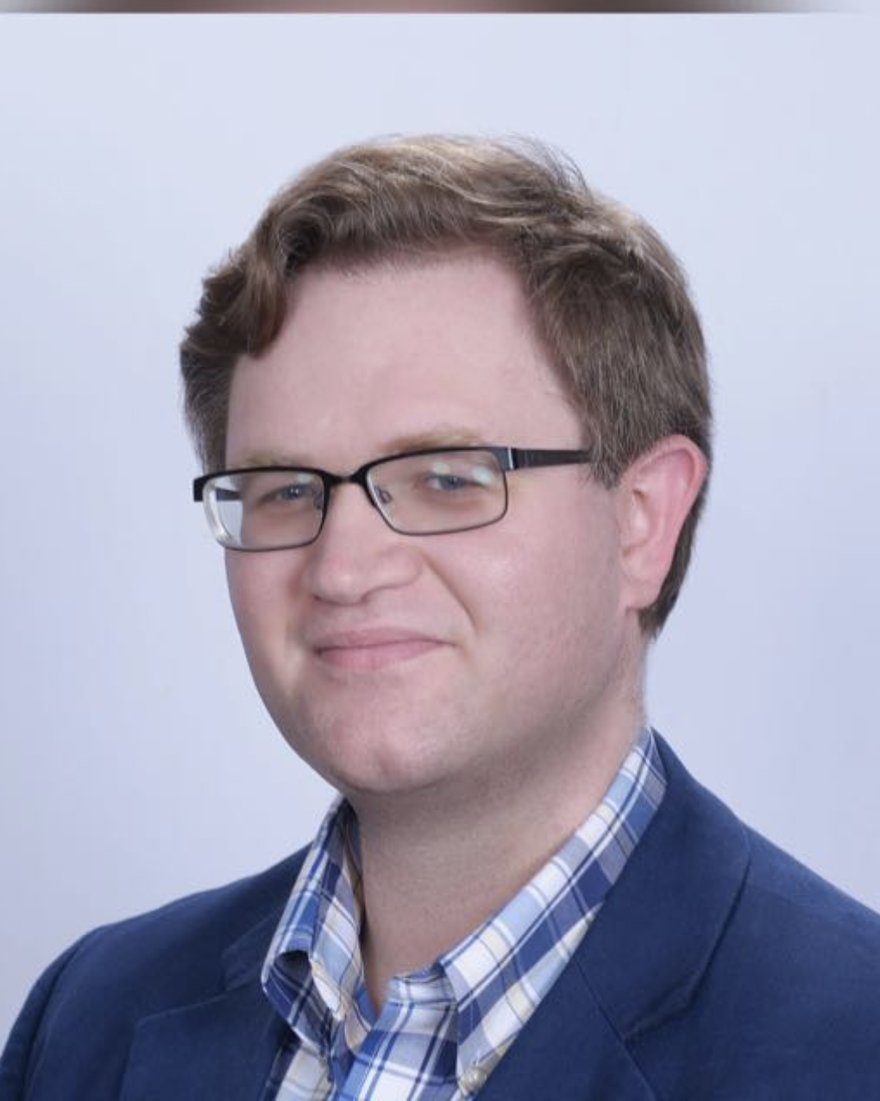
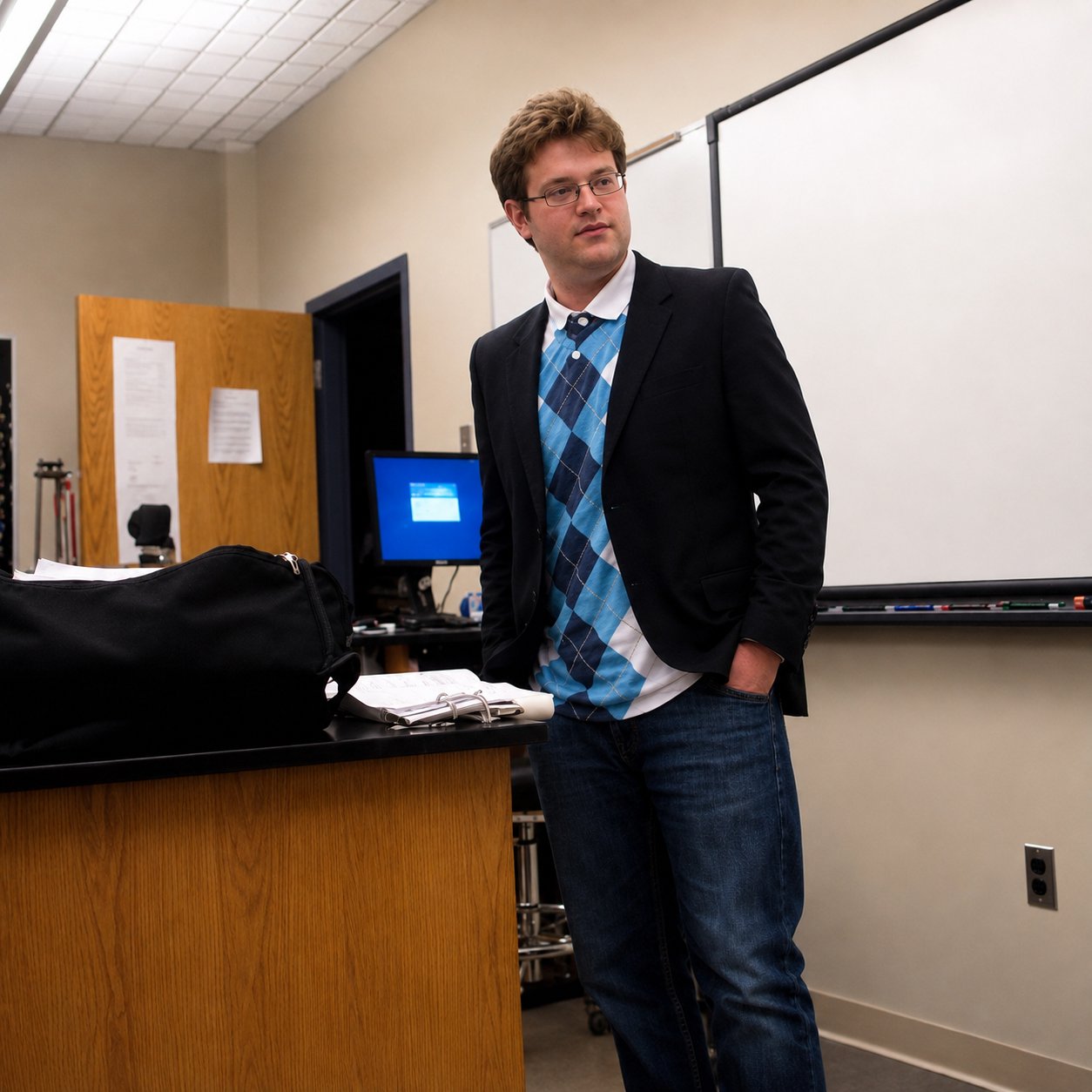
I’m Corey Christen. I teach biology, anatomy and physiology, and related sciences asynchronously to college students across the United States. Most of my students are working adults fitting a science course in around a job and a family. I’ve written the lessons, the review guides and the practice questions myself, usually at night, usually because what I needed either didn’t exist or cost more than my students could spend.
Most teaching resources are written by people who left the classroom, and it shows. I’m still teaching — so when I say a lesson structure holds up under pressure, it’s because I’ve watched it hold up, or watched it fail and rebuilt it.
I don’t think access to good educational materials should depend entirely on a school’s budget, a student’s family income, or whether a teacher happens to have enough hours left in the week to build everything from scratch.
I’m not going to pretend this fixes education. It doesn’t. This project does one thing, and it tries to do it extremely well: create genuinely useful educational resources and get them into as many hands as possible.
The problem is just the ordinary math of the job
None of this is a crisis you haven’t heard of. It is what the week actually looks like.
Planning time runs out
Prep periods get absorbed by meetings, coverage and paperwork long before the lesson gets built.
Budgets are finite
Department funds are allocated a year in advance. What’s left rarely stretches to curriculum materials.
Good resources cost money
The materials that actually save time are usually the ones behind a price tag or a license.
Access isn’t equal
Two teachers with identical skill can have wildly different toolkits depending on where they teach.
Evenings and weekends
The gap gets closed by teachers working unpaid hours. That is the current funding model, and it doesn’t scale.
Students feel the difference
A student’s opportunity to understand something difficult shouldn’t hinge on circumstances they didn’t choose.

What I’m building
Classroom-ready materials, made by a working educator, organized so they can actually be found and used. Not a link dump. A library.
Every resource goes through the same path: created → reviewed → corrected → organized → published → maintained. Publishing a file is easy. Keeping a library accurate, aligned, findable and up to date is the part that takes the real work.
This is an operating business, not a concept
Over 4,800 teaching resources across ELA, Math and Science are already published and sold on Teachers Pay Teachers, alongside five professional development courses, sixteen complete science unit guides, and two classroom tools — Scorae for grading and ClassSense for adaptive lessons.
The formats already in production include worksheets with separate answer keys, objective-aligned unit assessments where every key carries its reasoning, lesson plans with minute-by-minute timing and the misconceptions students actually arrive with, print-and-go review stations, and lab handouts written from years of running the bench — what breaks, what students do wrong, and how to fix it in under a minute.
On being straight with you
Professor C’s Academy LLC is a for-profit limited liability company, not a registered charity. I’d rather say that up front than let anyone find it out later.
Some of what is here is paid — the courses, the book, the resources on Teachers Pay Teachers. A great deal of it is free and stays free: the unit guides, the equipment guide, the first lesson of every course, the first chapter of the book. Where something is an affiliate link, it says so on the affiliate disclosure page.
If this ever grows into something funded by the people it serves, the same rule will apply to that: methodology, assumptions and limitations published alongside any number I report, and the old figure republished next to the new one whenever a method changes. A number you can’t check is just a claim.
This is bigger than a worksheet
A worksheet solves one afternoon. The longer aim is an organized, accessible set of materials that keeps compounding — where each resource makes the next one easier to build and easier to find.
What follows is a list of things I’d like to earn my way toward. None of it is a promise.
- Free educational resources — the core, and the part that stays free permanently.
- Translated materials, starting with Spanish, where I already produce.
- Accessibility improvements — screen-reader-friendly files, readable typography, alt text as standard.
- Interactive learning tools — practice that responds to the student instead of a static PDF.
- Video lessons, for the concepts a page genuinely can’t carry.
- Open educational content, licensed so others can adapt and improve it.
- Teacher collaboration — co-authored resources, credited to the people who wrote them.
What can $5 do?
On its own, not much. That is rather the point — this is built out of small contributions rather than a few large ones, because a resource funded by two hundred people belongs to everybody.
Contributions help fund the time, review, design and distribution behind free educational resources. I am not going to tell you that $5 equals exactly one worksheet. It doesn’t work that cleanly, and pretending otherwise would be the first lie on this page.
What one contribution actually funds is a step in the path every resource goes through: creation (hours at the desk writing the thing), review (accuracy, alignment, corrections), publication (formatting, tagging, hosting), and then free access — downloaded by anyone, at no cost, and used again next year. The resource at the end of that path doesn’t expire, and it doesn’t get billed to the next teacher who needs it.
Professor C’s Academy LLC is a for-profit limited liability company, not a registered charity. Contributions are not tax-deductible. I’d rather tell you that up front than let you find out later. Payments are handled by Stripe; I never see your card details.
If you want to help
And if contributing isn’t for you, that is genuinely fine. You can share this with a teacher who needs it. You can use a resource and tell me what didn’t work — the problems teachers send me are usually what the next thing ends up being about.
Are you a business? Sponsor a resource →
Corey Christen, PhD — adjunct professor of biology, anatomy and physiology; author of The Price of Illiteracy; founder, Professor C’s Academy LLC, Murfreesboro, Tennessee.